




Implementazione
SEE-VET sviluppa risorse formative, un repository digitale di strumenti e metodologie SEE, ed esperienze di apprendimento pratiche che permettono ai docenti VET di applicare approcci di Educazione Sociale ed Emotiva nelle proprie classi. Il progetto costruisce capacità a livello istituzionale, creando una cultura SEE che va oltre lo sviluppo professionale individuale e diventa integrata nella pratica quotidiana degli enti VET.
Risultati attesi
SEE-VET porta la dimensione umana nella formazione professionale, formando educatori e discenti non solo tecnicamente competenti, ma emotivamente intelligenti e socialmente consapevoli.

Centoform will collaborate in the design of advanced training interventions and exchange and comparison events and in the organizational management of the same.
It will also contribute to the identification of experts for the faculty board through the relationships established with international partners within the Erasmus + program and the KIC EIT Raw materials.
Duration: 128 hours, 88 in synchronous distance learning and 40 in presence in Ferrara, Italy
Period of realization: at distance 19th June – 9th July 2023 | In presence 4th – 17th Sept 2023
Location: University of Ferrara – Department of Economics and Management – via Voltapaletto 11, Italy
Number of participants: 20 | Methodology: Blended learning
MODULES
Sustainable development and industrial production | Introduction to circular economy | Environmental legislation | Energy performance | Redesigning products and new business models for services | The economic evaluation of environmental innovation projects (CBA analysis) | Life cycle thinking and analysis | Circular economy project management | Project financing | Budgeting | Physical-financialmonitoring and risk management | Corporate social responsability | Circular economy in productive processes – companies best practices
FACULTY
Director Massimiliano Mazzanti – University of Ferrara – CERCIS
Phoebe Koundouri – Professor Athens University of Economics and Business & Technical University of Denmark; President European Association of Environmental Resource Economists, Director Sustainable Development Unit at ATHENA Research Center, Chair SDSN Global Climate Hub, Co-Chair SDSN Europe
Henning Wilts – Wuppertal Institute for Climate, Environment, Energy – Division Circular Economy
Michele Pinelli – University of Ferrara- Dep. Of Engineering
Jude Sherry – Anois
Mateusz Wielopolski – AEVOLUTION – Circular materials innovation
Lucia Dal Negro – De-LAB srl Società Benefit
Participation fee | The course is cofinanced by Emilia-Romagna Region. There is no participation fee required. Application deadline: May 31st.
Access requirements | Graduates in different disciplines and employed people interested in acquiring skills related to circular economy project management.
Selection criteria | The selection will take place through the analysis of the CVs and online interviews.
Centoform collaborerà alla progettazione degli interventi di alta formazione e degli eventi di confronto e scambio e alla gestione organizzativa degli stessi.
Contribuirà inoltre all’individuazione di esperti per il faculty board attraverso le relazioni attivate con partner internazionali nell’ambito del programma Erasmus + e della KIC EIT Raw materials.
Durata: 128 ore, 88 in didattica a distanza sincrona e 40 in presenza a Ferrara, Italia
Periodo di realizzazione: a distanza 19 Giugno – 8 Luglio 2023 | In presenza dal 4 al 17 Settembre 2023
Sede: Università degli Studi di Ferrara – Dipartimento di Economia e Management – via Voltapaletto 11, Italia
Numero di partecipanti: 20 | Metodologia: Modalità mista
MODULI
Sviluppo sostenibile e produzione industriale | Introduzione all’economia circolare | Legislazione ambientale | Performance energetica | Ridisegnare prodotti e nuovi modelli di business per i servizi | La valutazione economica dei progetti di innovazione ambientale (analisi CBA) | Pensiero e analisi del ciclo di vita | Gestione di progetti di economia circolare | Finanziamento di progetti | Bilancio | Monitoraggio fisico-finanziario e gestione dei rischi | Responsabilità sociale d’impresa | Economia circolare nei processi produttivi: best practices aziendali
FACOLTÀ
Direttore Massimiliano Mazzanti – Università di Ferrara – CERCIS
Phoebe Koundouri – Athena RC – Direttore di EIT Climate KIC HUB Grecia
Henning Wilts – Wuppertal Institute for Climate, Environment, Energy – Division Circular Economy
Michele Pinelli – Università di Ferrara-Dip. Di Ingegneria
Jude Sherry – Anois
Mateusz Wielopolski – AEVOLUTION – Innovazione circolare dei materiali
Lucia Dal Negro – De-LAB srl Società Benefit
Quota di partecipazione | Il corso è cofinanziato dalla Regione Emilia-Romagna. Non è richiesta alcuna quota di partecipazione.
Requisiti di accesso | Laureati in diverse discipline e occupati interessati ad acquisire competenze legate alla gestione di progetti di economia circolare.
Criteri di selezione | La selezione si svolgerà attraverso l’analisi dei CV e colloqui online.

Programma: Erasmus+ – Educazione degli adulti
Codice progetto: 2021-1-FR01-KA220-ADU-000026628
Durata: 2 anni (dal 2021)
Partner capofila: Francia
Focus: Competenze nel settore della riparazione, transizione ecologica e digitale, apprendimento permanente
Overview del progetto
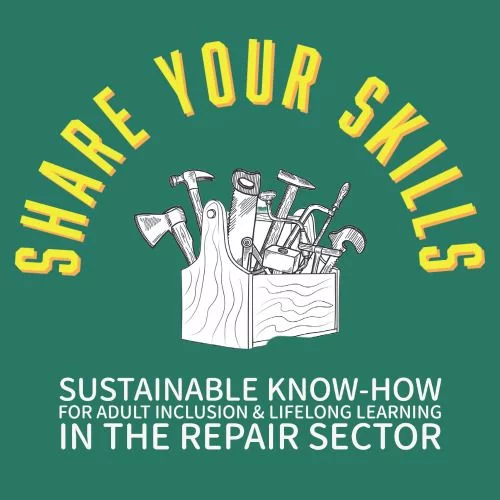
Share Your Skills è un progetto Erasmus+ per l’educazione degli adulti, finanziato dalla Commissione Europea della durata di due anni. Il progetto si concentra sul settore della riparazione come campo di sperimentazione per lo sviluppo e il rafforzamento di competenze tecniche e trasversali — formali e informali — degli adulti. Traendo ispirazione da esperienze di successo in tutta Europa — come i “Repair Cafè” molto diffusi in Francia e Germania e in crescita anche in Italia — il progetto esplora come le competenze di riparazione possano essere integrate in percorsi di apprendimento permanente. L’obiettivo è supportare la transizione ecologica e digitale favorendo al contempo società più inclusive e partecipative.
Obiettivi
Implementazione
Il progetto utilizza esperienze innovative come i Repair Cafè come ambienti di apprendimento, analizzando le competenze praticate informalmente in questi spazi comunitari. Sviluppa un passaporto delle competenze per rendere trasparenti e portabili le competenze acquisite dagli adulti attraverso attività informali di riparazione. Viene inoltre creato e testato nei paesi partner un toolkit formativo sui temi del recupero, della riparazione e del riciclo.
Risultati attesi
Share Your Skills mette la riparazione al cuore dell’apprendimento permanente, trasformando le pratiche quotidiane di sostenibilità in percorsi riconosciuti per l’educazione degli adulti e l’inclusione sociale.

Programma: Erasmus+
Settore: Edilizia, Architettura, Patrimonio Costruito
Tecnologie: VR, Immersive Interactive Experience (IIE), modellazione 3D avanzata, KETs
Pubblico target: Studenti, università, architetti, ingegneri, specialisti delle costruzioni, organizzazioni educative
Overview del progetto
ID4Ex affronta le priorità della strategia Europa 2030 su occupazione e istruzione, rispondendo all’insufficiente offerta di contenuti digitali di qualità per la formazione nel settore edile. Il settore delle costruzioni affronta sfide significative — accelerate dall’emergenza sanitaria — che richiedono un ripensamento fondamentale di spazi, filiere e approcci formativi. In questo contesto, la digitalizzazione rappresenta un importante driver di innovazione, efficacia ed eccellenza. ID4Ex promuove un approccio immersivo e inclusivo alla progettazione, combinando Realtà Virtuale, Immersive Interactive Experience (IIE), modellazione 3D avanzata e Tecnologie Abilitanti Chiave (KETs) per aggiornare le competenze nell’intervento sul patrimonio costruito.
Obiettivi
Implementazione
ID4Ex sviluppa uno studio di ricerca comparativa sulle tecnologie VR per la riabilitazione e valorizzazione del patrimonio costruito, insieme a moduli formativi per esperti di design immersivo e un toolkit formativo digitale. Il progetto si rivolge principalmente a studenti e università, ma coinvolge anche architetti, ingegneri, specialisti delle costruzioni e organizzazioni educative, garantendo che le nuove competenze immersive siano radicate nell’intero ecosistema formativo del settore edile.
Risultati attesi
ID4Ex porta la tecnologia immersiva al cuore della formazione edile, abilitando una nuova generazione di professionisti a progettare e preservare il patrimonio costruito con strumenti all’avanguardia.

Programma: Erasmus+ KA2 – Partenariati Strategici VET
Codice progetto: 2016-1-IT01-KA202-005399
Durata: Concluso
Paesi: Italia, Finlandia, Norvegia, Regno Unito
Organizzazione capofila: Centoform Srl, Italia
Partner: Oulun Yliopisto (FI), Viasys Vdc Oy (FI), Regione Emilia-Romagna (IT), Universitetet I Stavanger (NO), AEEBC Ltd (UK)
Overview del progetto
Il Building Information Modelling (BIM) è un processo che riguarda la generazione e la gestione di rappresentazioni digitali delle caratteristiche fisiche e funzionali di edifici e infrastrutture. Mentre nei paesi del nord Europa — Finlandia e Norvegia — il BIM è già ampiamente adottato, in Italia e nel sud Europa la diffusione era ancora limitata. BIM 4 Placement è stato un progetto Erasmus+ di capacity building che ha puntato a colmare questo divario attraverso la cooperazione transnazionale tra sei organizzazioni di Italia, Finlandia, Norvegia e Regno Unito. Il progetto ha promosso il BIM come disciplina formativa per l’occupabilità, aggiornando le qualifiche esistenti e creando una rete per l’apprendimento basato sul lavoro.
Obiettivi
Implementazione
Il progetto ha coinvolto sei organizzazioni — enti di formazione professionale, autorità regionali, università e un’associazione europea — provenienti da tre paesi. I partner hanno condotto corsi di formazione transnazionali intensivi per lo scambio di buone pratiche nell’insegnamento e nell’implementazione del BIM, affiancati da eventi formativi locali per formatori, insegnanti e studenti del settore edile. È stato inoltre sviluppato un serious game sul BIM per principianti e una ricerca comparativa.
Risultati attesi
BIM 4 Placement ha accelerato l’adozione del Building Information Modelling in Europa, aprendo la strada ai paesi del sud Europa verso i livelli di implementazione dei loro omologhi del nord.

Programma: Erasmus+
Focus: Competenze verdi, economia circolare, capacity building VET
Partnership: Centri di ricerca, centri VET, università, PMI, cluster, organizzazioni ombrello, pubbliche amministrazioni
Visione: Un’Area Europea di Formazione per l’Economia Circolare
Overview del progetto
Il cambiamento climatico e la necessità di abbandonare il paradigma dell’economia lineare richiedono un ripensamento fondamentale delle competenze nella forza lavoro. Il Progetto TICHE risponde a questa esigenza istituendo un’Accademia VET Europea per l’Economia Circolare, guidata da una partnership transnazionale altamente qualificata e complementare. Il progetto è radicato nel riconoscimento che i “green job” — attesi per rappresentare oltre l’80% dei posti di lavoro entro il 2030 — richiedono non solo cambiamenti compositivi delle competenze, ma una sostanziale trasformazione dei domini di competenza. TICHE affronta sia la crescente domanda di lavoratori con competenze verdi sia la necessità di imprenditori con una “mentalità green”, allineandosi con le Strategie di Specializzazione Intelligente in tutti i paesi partner.
Obiettivi
Implementazione
TICHE opera come un ecosistema che riunisce centri di ricerca, centri VET, università, PMI, cluster, organizzazioni ombrello, reti internazionali e pubbliche amministrazioni. Questo consorzio diversificato lavora in modo collaborativo per costruire capacità e produrre risorse trasferibili che rafforzino la reattività dei sistemi VET in tutta Europa, in linea con il concetto di Area Europea di Formazione. Il coinvolgimento dei partner copre l’intera catena dell’innovazione nell’economia circolare, dalla ricerca e progettazione curriculare alla sperimentazione e disseminazione.
Risultati attesi
TICHE costruisce le fondamenta di un ecosistema europeo di competenze verdi, rendendo i sistemi VET il motore della transizione verso l’economia circolare.


Programma: LIFE – Programma UE per l’Ambiente e l’Azione Climatica
Periodo: Ottobre 2021 – Giugno 2022
Territorio: Regione Emilia-Romagna, Italia
Filiere: Ortofrutta, Viticoltura, Lattiero-casearia (Parmigiano Reggiano)
Partecipanti target: 50 agricoltori e membri di organizzazioni di produttori
Contatto: Elena Zani | elena.zani@centoform.it | 051 68 30 470
Overview del progetto
Il progetto Life ADA mira a raggiungere solidi obiettivi in termini di resilienza ai cambiamenti climatici lungo tre filiere agroalimentari nella regione Emilia-Romagna: il settore lattiero-caseario (Parmigiano Reggiano), la vitivinicoltura e la produzione ortofrutticola. Il progetto eroga un programma strutturato di formazione e sensibilizzazione rivolto ad agricoltori, organizzazioni di produttori e operatori del settore. Attraverso una serie di webinar tecnici e workshop di scambio di buone pratiche, Life ADA fornisce conoscenze concrete e specifiche per settore sugli impatti dei cambiamenti climatici, la gestione del rischio, le strategie di adattamento e i nuovi strumenti digitali applicati all’agricoltura.
Obiettivi
Implementazione
Il programma eroga 9 webinar — 6 tecnici e 3 dedicati allo scambio di buone pratiche — oltre a visite di studio in azienda. Le attività sono supportate da un tutor facilitatore che garantisce la qualità pedagogica e il coinvolgimento dei partecipanti. I temi spaziano dalle proiezioni climatiche e i big data in agricoltura agli impatti economici settoriali e agli strumenti di adattamento per il Parmigiano Reggiano, la vitivinicoltura e la produzione ortofrutticola.
Risultati attesi
Life ADA dota gli operatori agricoli dell’Emilia-Romagna delle conoscenze e degli strumenti per costruire la resilienza climatica e assicurare il futuro delle proprie filiere.



Referenti
Elena Zani
elena.zani@centoform.it
Tel: 051 68 30 470





Programma: Erasmus+ KA2
Durata: 3 anni (settembre 2020 – settembre 2023)
Partner capofila: Rzeszow University of Technology – Polonia
Partner: National Technical University of Athens (GR), Furtwangen University (DE), Centoform Srl (IT)
Settori di riferimento: Ingegneria meccanica, ingegneria civile/edile
Overview del progetto
EDURES affronta un bisogno concreto nell’istruzione terziaria: i risultati della ricerca vengono utilizzati in modo insufficiente e inadeguato nella didattica a livello universitario e di alta formazione tecnica. Il progetto riunisce tre università e un centro VET di Polonia, Grecia, Germania e Italia in una collaborazione internazionale e interdisciplinare per progettare metodologie, strumenti digitali e risorse didattiche che integrino i risultati della ricerca nell’educazione ingegneristica.
Obiettivi
Implementazione
Le quattro organizzazioni partner lavorano in modo collaborativo per produrre cinque output intellettuali nell’arco di tre anni. Centoform partecipa come partner VET, garantendo che gli output siano applicabili non solo a livello universitario ma anche nell’alta formazione professionale (IFTS/ITS). Il progetto adotta approcci interdisciplinari nell’ingegneria meccanica e civile/edile, collegando la ricerca accademica alle esigenze didattiche pratiche.
Risultati attesi
EDURES colma il divario tra ricerca e didattica, garantendo che le conoscenze ingegneristiche più aggiornate raggiungano gli studenti di università e istituti tecnici in tutta Europa.

Programma: Erasmus+ KA2 – Cooperazione per l’Innovazione e lo Scambio di Buone Pratiche
Partner capofila: Estonian University of Life Sciences
Partner: University of Stavanger (NO), Rzeszow University of Technology (PL), Kaunas University of Technology (LT), Centoform Srl (IT)
Paesi: Estonia, Norvegia, Polonia, Lituania, Italia
Overview del progetto
DIG-MAN è un progetto Erasmus+ KA2 per la cooperazione per l’innovazione e lo scambio di buone pratiche. Attraverso una partnership internazionale, il progetto fornisce un nuovo strumento innovativo per l’e-learning nel settore manifatturiero. L’obiettivo principale è quello di migliorare le conoscenze relative all’utilizzo degli strumenti di produzione digitale a livello di istruzione superiore, creando materiali didattici universalmente adattabili per IFTS, ITS, università e centri VET. DIG-MAN affronta le sfide locali ed europee legate alla disoccupazione giovanile, ai gap di competenze nella formazione e all’evoluzione delle tecnologie di produzione digitale. Attraverso una filosofia open-source, il progetto complementa gli strumenti formativi esistenti posizionando università, agenzie VET e aziende come attori attivi dello sviluppo socioeconomico europeo.
Obiettivi
Implementazione
DIG-MAN sviluppa tre output intellettuali complementari: una Guida Didattica ProDeM per educatori, un Quaderno di Lavoro Digitale Integrato per studenti e materiali e-learning interattivi per 12 corsi selezionati di sviluppo prodotto. Gli strumenti sono efficaci, validati internazionalmente, portabili e flessibili. La disseminazione avviene tramite il sito web del progetto, il coinvolgimento degli stakeholder e la partecipazione a conferenze e summer school in Europa.
Risultati attesi
DIG-MAN offre strumenti digitali aperti e adattabili che portano l’educazione manifatturiera nel XXI secolo in cinque paesi europei.

Programma: Erasmus+ KA2 – Partenariati Strategici (intersettoriale: VET e Istruzione Scolastica)
Durata: 24 mesi (novembre 2019 – ottobre 2021)
Partner capofila: Colegiul Tehnic “Cibinium” – Romania
Partner: OEIBF (AT), CIFP Valle de Elda (ES), ZEPSOL School (PL), Melazeta Srl (IT), Centoform Srl (IT)
Paesi: Romania, Austria, Spagna, Polonia, Italia
Overview del progetto
SMART&STEAM VET è un progetto Erasmus+ KA2 di Partenariato Strategico focalizzato sull’attrattività della formazione professionale, lo sviluppo professionale e l’inclusione sociale in cinque paesi europei. Il progetto affronta le problematiche chiave legate all’attrattività della VET nell’era digitale, allo sviluppo professionale e alla parità di genere nelle materie STEAM e nella cultura tecnica. Utilizzando il Serious Gaming come metodologia centrale, il progetto mira a creare strumenti di orientamento trasferibili per insegnanti, formatori e tutor VET, e a sviluppare strategie per un’efficace cooperazione VET-impresa. Affronta inoltre l’abbandono scolastico precoce e gli stereotipi di genere legati alle discipline STEAM — materie sempre più richieste dal mercato del lavoro.
Obiettivi
Implementazione
Il progetto realizza due eventi transnazionali congiunti di formazione del personale e cinque eventi moltiplicatori a livello locale. Vengono prodotti due nuovi output intellettuali digitali, disseminati attraverso gli eventi della Settimana Europea delle Competenze. Una combinazione di partner complementari — tre enti VET, un istituto di ricerca VET e una società di gamification — lavora insieme per creare messaggi di orientamento efficaci per studenti, famiglie, scuole e decisori politici. La disseminazione raggiunge almeno 2.500 beneficiari attraverso attività di outreach.
Risultati attesi
SMART&STEAM VET trasforma l’orientamento professionale in un’esperienza digitale coinvolgente e inclusiva che aiuta i giovani a fare scelte consapevoli per il proprio futuro.
Questo sito utilizza cookie tecnici e di profilazione.
Puoi accettare, rifiutare o personalizzare i cookie premendo i pulsanti desiderati.
Chiudendo questa informativa continuerai senza accettare.
Accettando, sei consapevole che i tuoi dati personali possono essere raccolti allo scopo di personalizzare e misurare l'efficacia della pubblicità.
Impostazioni privacy
Questo sito utilizza i cookie per migliorare la tua esperienza di navigazione su questo sito.
Visualizza la Cookie Policy
Google Analytics è un servizio di analisi web fornito da Google Ireland Limited (“Google”). Google utilizza i dati personali raccolti per tracciare ed esaminare l’uso di questo sito web, compilare report sulle sue attività e condividerli con gli altri servizi sviluppati da Google. Google può utilizzare i tuoi dati personali per contestualizzare e personalizzare gli annunci del proprio network pubblicitario. Questa integrazione di Google Analytics rende anonimo il tuo indirizzo IP. I dati inviati vengono collezionati per gli scopi di personalizzazione dell'esperienza e il tracciamento statistico. Trovi maggiori informazioni alla pagina "Ulteriori informazioni sulla modalità di trattamento delle informazioni personali da parte di Google".
Luogo del trattamento: Irlanda - Privacy Policy
Consensi aggiuntivi:
Google Tag Manager è un servizio di gestione dei tag fornito da Google Ireland Limited.I dati inviati vengono collezionati per gli scopi di personalizzazione dell'esperienza e il tracciamento statistico. Trovi maggiori informazioni alla pagina "Ulteriori informazioni sulla modalità di trattamento delle informazioni personali da parte di Google".
Luogo del trattamento: Irlanda - Privacy Policy
Brevo è un servizio di gestione dei database di utenti fornito da SendinBlue SAS.
Luogo del trattamento: Francia - Privacy Policy
Facebook Remarketing è un servizio di Remarketing e Behavioral Targeting fornito da Facebook Ireland Ltd. Questo servizio è usato per collegare l'attività di questo sito web con il network di advertising Facebook.
Luogo del trattamento: Irlanda - Privacy Policy
Google Fonts è un servizio per visualizzare gli stili dei caratteri di scrittura gestito da Google Ireland Limited e serve ad integrare tali contenuti all’interno delle proprie pagine.
Luogo del trattamento: Irlanda - Privacy Policy
Il monitoraggio conversioni di LinkedIn (LinkedIn Insight Tag) è un servizio di statistiche e di targeting comportamentale fornito da LinkedIn Corporation che collega i dati provenienti dal network di annunci LinkedIn con le azioni compiute all'interno di questo Sito Web.
Luogo del trattamento: Stati Uniti - Privacy Policy
Il monitoraggio per le conversioni di Google Ads è un servizio di statistiche fornito da Google Inc. che viene usato per inviare i dati delle azioni compiute all'interno di questo Sito web.
Luogo del trattamento: Irlanda - Privacy Policy
Il pulsante “Mi Piace” e i widget sociali di Facebook servono per interagire con il social network Facebook e sono forniti da Facebook Ireland Ltd.
Luogo del trattamento: Irlanda - Privacy Policy